



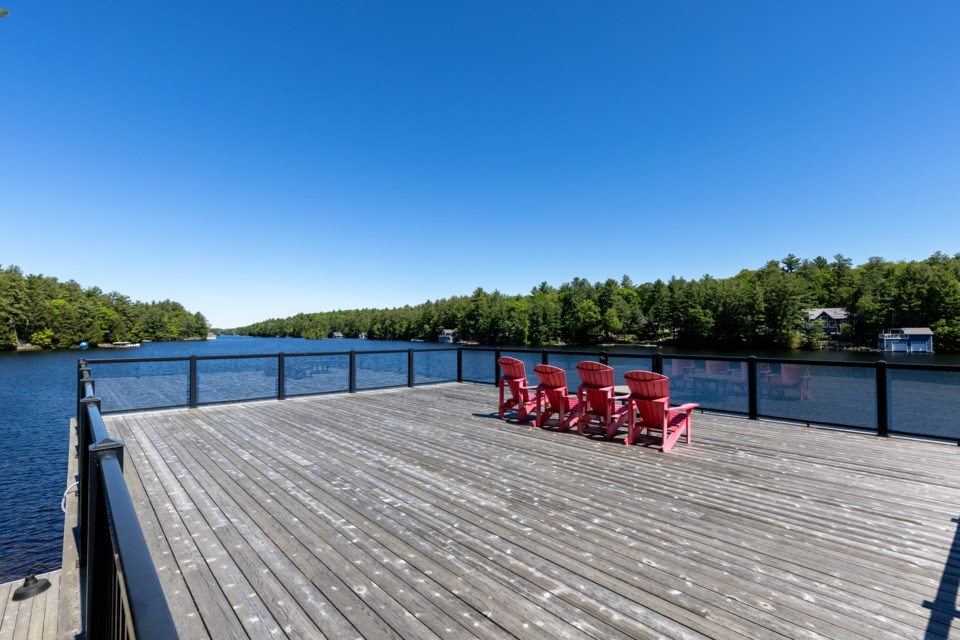
Two buyers can stand on the same dock.
Same lake. Same breeze through the pines.
Same view that makes everyone go quiet for a second.
One buyer sees the summer they have been craving.
The other buyer sees the questions that still need to be answered.
Same cottage. Different decision.
The uncomfortable truth
Most buyers do not fall in love with the whole property.
They fall in love with a moment.
The view. The dock. The fireplace.
The kids running toward the water. The thought of coffee on the deck before anyone else is awake.
Family dinners on the deck, and every weekend feeling better than the last.
And none of that is wrong.
Honestly, who could blame them?
That is part of the magic of cottage country.
A cottage is not a purely practical purchase. It is emotional. It is personal. It is often tied to family, freedom, retirement, childhood memories, or the life you are trying to create.
But a cottage purchase gets expensive when the moment becomes the whole decision.
The dream pulls people in.
The details decide whether that dream lasts.

But before you let one perfect showing carry the whole decision, pause.
In cottage country, the smartest buyers know how to separate what can be changed from what cannot.
Paint can change.
Furniture can be upgraded
A kitchen can evolve.
A tired bathroom can be improved.
Even an awkward room can sometimes find a better purpose.
But the shoreline?
The exposure?
The access?
The land?
The rules around what can be built, improved, expanded, or used?
Those should stop you in your tracks, and pause before you sign the dotted line.
Let’s call it, The Unchangeables Checklist.
Before you buy the cottage, here are five things to keep top of mind.

1. The Shoreline
The shoreline is one of the most important parts of any waterfront property.
It also happens to be one of the things buyers can overlook when the lake is sparkling and the view is doing all the talking.
Before falling in love with the view, buyers should look closely at how the water actually works.
What to look for
- Is it deep or shallow?
- Is the entry sandy, rocky, weedy, or soft bottom?
- Is it easy to swim?
- Is it safe and usable for children, guests, pets, or aging family members?
- Is there boat traffic close to shore?
- Is the shoreline protected or exposed to strong wind?
- Does the waterfront feel private from the lake?
A dramatic view may photograph beautifully, but the way a family uses the water will shape the daily experience.
Some buyers want deep water for boating and swimming off the dock.
Some want a gradual entry for little feet.
Some want quiet paddling.
Some want big-lake boating.
Some want privacy more than anything.
There is no single “best” shoreline.
There is only the shoreline that fits the life you are trying to build.
You can update a kitchen.
You cannot simply order a better lakefront.

2. The Exposure
Exposure shapes the experience of a cottage more than many buyers realize.
It’s not just direction
A west-facing cottage may promise sunsets, but heavy tree coverage, a steep slope, or the way the land sits can change where the sun actually lands.
A south-facing dock may sound ideal, until the best seating area is tucked in shade most of the day.
A big water view can be beautiful, but the real question is how the light moves through the property.

- Does the dock get morning sun?
- Does the deck catch afternoon light?
- Will you see sunsets?
- Does the outdoor space feel comfortable during the hours you are most likely to use it?
A showing experience gives you one moment in time.
The property has to live well beyond that moment.
If you are dreaming about slow mornings by the water, evening dinners outside, or long days on the dock, exposure matters.
The view may sell the moment.
The exposure shapes what life looks like all summer.
3. The Access
Access is one of the less romantic parts of cottage ownership.
It is also one of the most important.
When buyers imagine cottage life, they usually picture the arrival.
The bags coming out of the car. The screen door opening. The first walk down to the water.
Arrival matters

But arrival is not just about pulling into the driveway and exhaling.
- Is the road municipal, private, or seasonal?
- Is the access legally deeded?
- Who maintains it in July and in January?
- Is the driveway steep, narrow, shared, or complicated?
- Where does everyone park?
- Can service providers, contractors, and emergency vehicles get in reasonably?
- How far are you from groceries, fuel, medical care, marinas, restaurants, and town?
Privacy is beautiful.
Remote can be wonderful.
But every layer of distance or difficulty becomes part of ownership.
A cottage should feel like an escape.
It should not become a logistical nightmare.
4. The Land
The land is where beauty and practicality meet.
It’s not just the background. It’s the experience.
It decides who gets to the water, where cars are parked, where kids play and people gather. It decides if cottage life will feel easy or complicated.
Buyers miss this when they fall for the cottage first.
An elevated lot can deliver the view, but it may also mean less usable outdoor space, more stairs, and a harder trip to the dock when someone forgets the towels.
Ask yourself the lifestyle question
Are you a “look at the water” person?
Or an “on the water” person?

A more level lot can feel easier for kids, pets, guests, and grandparents, but level does not always mean simple.
- Where does the water go after heavy rain?
- Are there wet areas or low spots?
- Could changing water levels become part of the story?
- Is there privacy where it matters?
Changing the land is rarely as simple as changing the cottage.
Septic upgrades, drainage improvements, pathways, retaining walls, shoreline work, and future construction can become much more complicated when terrain or access works against you.

Sometimes the cottage is charming, but the property fights you.
Sometimes the cottage needs work, but the land is the gift.
A smart buyer knows which one they are really buying.
5. The Rules Around the Property
This is where assumptions can get very expensive.
Before buying a cottage, it is important to understand what the property physically and legally allows.
That may include zoning, setbacks, septic capacity, well information, shoreline rules, road agreements, permits, docks, boathouses, bunkies, additions, rentals, and future renovation plans.
Ask before you assume
If you are buying with a long-term ownership plan, do not assume every idea will be possible.
- Want to add a bunkie?
- Expand the cottage?
- Build a garage?
- Expand or extend a dock?
- Create more sleeping space?
- Use the property differently in the future?
Ask the questions before you buy.
The dream is one thing.
What the property allows is another.

That does not mean every unknown is a problem.
It means the right questions need to be asked early, with the right guidance, before your future plans were based on false assumptions.
What Are You Really Buying?
The goal is not to talk yourself out of buying the cottage.
The goal is to see the whole property clearly.
A cottage should absolutely make you feel something.
That is part of the magic.
But the right cottage should also hold up under better questions.
So before you write the offer, run the property through the Unchangeables Checklist:
- Shoreline
- Exposure
- Access
- Land
- Rules
The dream matters.
But the details decide whether the dream lasts.
Know someone cottage hunting right now?
Share this before they fall in love with the view and forget to study the property.
Melissa Bradbury and the team at Peryle Keye Real Estate Brokerage have spent more than a decade helping buyers and sellers make thoughtful, confident decisions in Muskoka’s unique real estate market.
That commitment to clarity and client guidance was recently recognized when the brokerage was voted Best Real Estate Brokerage in Muskoka in the 2026 Reader’s Choice Awards.
Thinking about your next move? Start the conversation early.
To connect with Melissa Bradbury and the team at Peryle Keye Real Estate Brokerage, call 705-646-5300, email , or visit www.perylekeye.ca.
For ongoing insights, market updates, and featured listings, follow @perylekeye on Instagram, Facebook, and YouTube.
Back to Media